
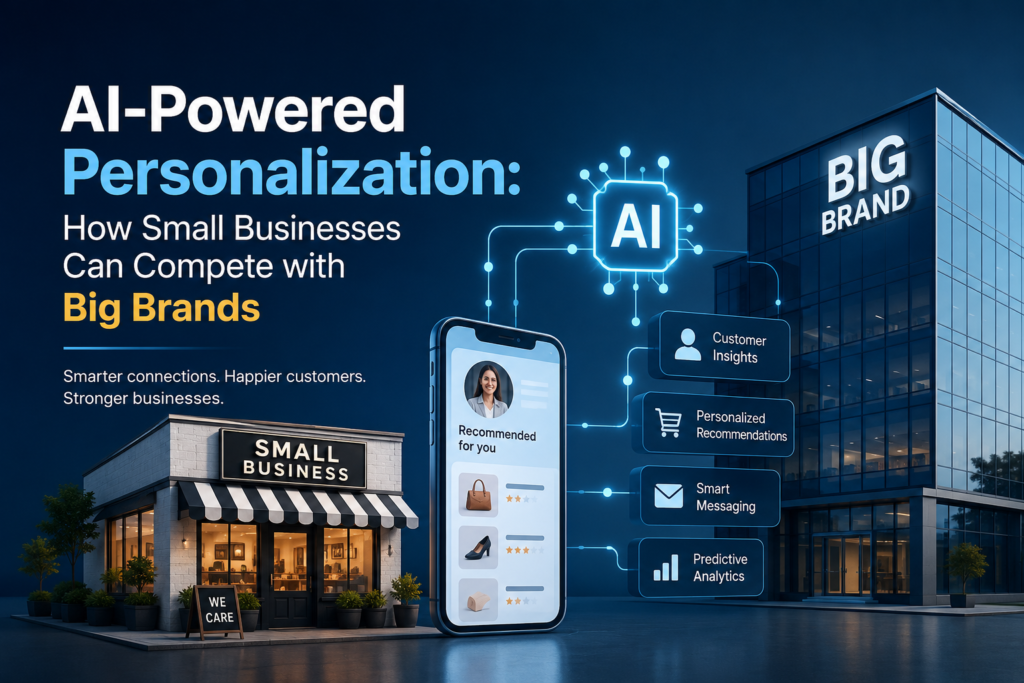
AI-Powered Personalization: How Small Businesses Can Compete with Big Brands
For years, personalized marketing felt like a luxury only big corporations could afford. Companies like Amazon and Netflix built entire teams and multi-million-dollar systems just to recommend the right product or show at the right time. If you were running a small business, you simply didn’t have the budget, data science team, or infrastructure to compete.
That’s no longer true.
AI-powered personalization tools have become affordable, accessible, and — most importantly — genuinely effective for businesses of any size. In this post, we’ll break down exactly how small and mid-sized businesses can use AI to deliver the kind of tailored customer experience that used to require an enterprise budget.
Why Personalization Matters More Than Ever
Customers today expect brands to understand them. Generic, one-size-fits-all marketing gets ignored. Studies consistently show that personalized experiences lead to higher engagement, better conversion rates, and stronger customer loyalty. The businesses that win aren’t necessarily the ones with the biggest budgets — they’re the ones that make customers feel seen.
1. Smart Chatbots for 24/7 Personalized Sup
AI chatbots have evolved far beyond scripted FAQ bots. Modern tools can hold natural conversations, remember customer preferences, recommend products based on browsing behavior, and even handle basic troubleshooting — all without human intervention. For a small business, this means offering the kind of responsive, tailored support that used to require a full customer service team.
Action step: Start with a chatbot on your website or Instagram/WhatsApp that greets returning visitors differently than first-time visitors, and recommends products based on what they’ve viewed.
2. Dynamic Website Content
Instead of showing every visitor the same homepage, AI tools can now adjust content in real time based on visitor behavior, location, referral source, or past interactions. A first-time visitor might see a welcome offer, while a returning customer sees new arrivals based on their purchase history.
Action step: Use affordable personalization plugins (many integrate directly with Shopify, WordPress, or Squarespace) to test dynamic banners or product recommendations.
3. Predictive Email and Product Recommendations
AI can analyze purchase history and browsing patterns to predict what a customer is likely to want next — then automatically trigger a personalized email or notification. This used to require a data science team; now it’s built into most modern email marketing platforms.
Action step: Set up automated “recommended for you” email flows triggered by past purchases or cart abandonment, rather than sending the same newsletter to your entire list.
4. AI-Generated, Audience-Specific Content
Rather than writing one generic blog post or ad for everyone, AI tools can help you quickly create variations tailored to different customer segments — different tone, different pain points, different calls to action — without multiplying your workload.
Action step: Take one core piece of content and use AI to adapt it for 2–3 distinct audience segments (e.g., new customers vs. loyal repeat buyers).
The Real Advantage: Speed and Agility
Big brands often move slowly because of internal approval processes and legacy systems. Small businesses can actually out-maneuver them by testing and adjusting personalization strategies quickly. You don’t need a perfect system — you need to start experimenting, measure what resonates, and refine as you go.
Final Thoughts
Personalization is no longer a big-budget game. With the right AI tools, small businesses can create tailored, relevant experiences that build genuine customer relationships — often faster and more nimbly than their larger competitors. The businesses that start experimenting now will be the ones setting the standard in their industry a year from now.